Around the World in 80 Days – Book, Films, TV and Route Guide
Jules Verne’s adventure novel Around the World in Eighty Days has captivated readers since its publication in 1872, spawning numerous adaptations across film, television, and other media. The story of Phileas Fogg’s daring wager to circumnavigate the globe in 80 days remains one of literature’s most enduring tales, blending suspense, cultural exploration, and a celebration of Victorian-era innovation in transportation. This comprehensive guide explores the original novel, its major adaptations, the legendary route Fogg follows, and the cast members who have brought this story to life across different eras.
From its origins in late nineteenth-century France to modern BBC productions, Around the World in 80 Days has proven remarkably adaptable, reimagined for different audiences while preserving its core narrative of global adventure and meticulous planning. The novel’s influence extends well beyond literature, shaping how audiences perceive world travel and the spirit of calculated risk-taking.
What is Around the World in 80 Days book?
Around the World in Eighty Days is an adventure novel by French writer Jules Verne, first published in French in 1872. Unlike most of Verne’s other works, the story does not qualify as science fiction or fantasy, instead presenting a realistic adventure grounded in the transportation technologies available at the time. The novel follows Phileas Fogg, a wealthy and precise London gentleman of meticulous habits who lives a regimented life in quiet respectability.
The story begins when Fogg makes a momentous wager with fellow members of the Reform Club. After reading in The Daily Telegraph that a new railroad in India has made an 80-day circumnavigation theoretically possible, Fogg bets £20,000—half his entire fortune—that he can complete such a journey in 80 days or less. This sum would be equivalent to approximately £2.5 million in 2024, making the wager a genuinely high-stakes proposition that would transform Fogg’s financial standing regardless of the outcome.
Fogg departs from London by train at 8:45 p.m. on October 2, 1872, accompanied by Jean Passepartout, a French valet he hires on the very morning of departure. Their journey takes them eastward through Egypt, India, Hong Kong, Japan, and America, facing numerous obstacles while pursuing the impossible timeline. The eastward direction of travel would prove crucial to the story’s resolution, as crossing time zones would ultimately grant Fogg the extra time needed to win his wager.
Phileas Fogg represents the Victorian ideal of the rational, methodical Englishman, while Jean Passepartout provides the emotional warmth and practical problem-solving that drives the narrative forward.
Original Book
Jules Verne 1872 novel
1956 Film
Oscar-winning adaptation
2004 Movie
Jackie Chan action version
2021 TV Series
David Tennant BBC/PBS series
Key Insights from the Novel
- The £20,000 wager represents half of Fogg’s fortune, making the outcome genuinely consequential rather than merely recreational
- Fogg’s character embodies Victorian rationalism and methodical planning, offset by Passepartout’s spontaneity and emotional intelligence
- The novel reflects mid-Victorian attitudes toward global travel, with both the possibilities and prejudices of the era intact
- Verne’s attention to actual transportation schedules and routes demonstrates remarkable research for a work of fiction
- The eastward journey proves essential to the plot’s resolution, as crossing time zones grants the travelers their final advantage
| Aspect | Details |
|---|---|
| Author | Jules Verne |
| Publication | 1872 |
| Original Title | Le tour du monde en quatre-vingts jours |
| Wager Amount | £20,000 |
| Key Character | Phileas Fogg |
| Primary Setting | Victorian-era London and global travels |
What is the 1956 Around the World in 80 Days film?
The 1956 film adaptation of Around the World in 80 Days stands as one of the most ambitious Hollywood productions of its era. Directed by Michael Anderson and produced by Michael Todd, this epic adventure film represented a significant cultural moment, bringing Verne’s story to international audiences on an unprecedented scale. The production reportedly involved filming across multiple continents, capturing authentic locations that had previously existed only as descriptions in Verne’s text.
The film’s success was recognized at the Academy Awards, where it received multiple nominations and wins that reflected both its technical achievements and its ability to translate the novel’s sense of wonder to the cinema screen. The production drew upon the resources and star power available during Hollywood’s golden age of epic filmmaking, assembling a cast capable of carrying the weight of such an ambitious project.
For audiences of the 1950s, the film represented both a technological marvel in its own right and a window into the world that Verne had imagined decades earlier. The combination of location shooting, elaborate sets, and the sweeping narrative established the template against which subsequent adaptations would be measured. According to records from the time, the production spanned numerous countries, bringing together creative talents from multiple cinematic traditions to create something genuinely global in scope.
Significance of the 1956 Adaptation
The 1956 film occupies a crucial position in the adaptation history of Verne’s novel, demonstrating that the story’s appeal extended well beyond literary circles and into the broader cultural consciousness. Its success helped establish the adventure genre as a viable vehicle for prestige filmmaking, influencing how studios approached similar literary properties in subsequent decades.
The 1956 film adaptation required extensive international filming, with production taking place across multiple continents to capture the authentic global journey that defines the novel’s narrative.
Details on Around the World in 80 Days movie with Jackie Chan
A more contemporary film adaptation brings the story into the action-comedy genre that has proven successful across global cinema markets. This version reimagines the adventure with modern sensibilities, incorporating physical comedy and spectacular set pieces that reflect changing audience expectations for large-scale entertainment. The production leverages international co-production resources to create something that resonates with viewers across different cultural contexts.
The film introduces elements that appeal to family audiences while maintaining the core narrative structure of Verne’s novel: the high-stakes wager, the global journey, and the tension between careful planning and unpredictable circumstances. Visual spectacle takes precedence in key sequences, with elaborate chase sequences and action choreography complementing the underlying story of growth and discovery.
This modern interpretation demonstrates how the original story’s framework continues to provide creative opportunities for filmmakers working in different genres and targeting different demographic groups. The enduring appeal of the circumnavigation concept translates effectively to contemporary action filmmaking, even as the specific cultural references and character dynamics shift to reflect current times.
Modern Filmmaking Approaches
The contemporary adaptation showcases how Verne’s nineteenth-century narrative adapts to modern action cinema conventions. While maintaining the essential structure of the original story, the filmmakers incorporate visual effects, extended action sequences, and comedic elements that distinguish this version from earlier, more straightforward adaptations.
International production resources allow for authentic location filming that brings genuine visual variety to the global journey, while the action choreography reflects the physical comedy traditions that have proven successful across Asian and Western markets alike. The result represents a hybrid approach that honors the source material while embracing contemporary filmmaking possibilities.
What is Around the World in 80 Days with David Tennant?
A recent television adaptation brings the story to contemporary audiences through the resources and reach of public broadcasting networks. This version, produced as a joint venture between major British and American broadcasters, presents the adventure as an episodic narrative suited to modern television viewing patterns. The production leverages established television production capabilities to create a version that feels both fresh and familiar to audiences familiar with prestige period drama.
David Tennant leads the cast as Phileas Fogg, bringing to the role his experience with period drama and his established connection with audiences who appreciate thoughtful character work within adventure narratives. The casting reflects the production’s intention to balance spectacle with genuine emotional engagement, allowing for character development that might receive less attention in purely action-oriented adaptations.
The television format allows for greater attention to character development and the nuances of the story’s cultural encounters, as episode structure permits exploration of individual destinations and challenges without the compressed pacing necessary for feature film adaptations. This approach aligns with contemporary prestige television conventions that prioritize depth and character over mere spectacle.
The BBC and PBS Partnership
The collaboration between British and American public broadcasters reflects the story’s international appeal and the production values that prestige television now demands for major literary adaptations. This partnership ensures both the British sensibility that honors Verne’s original context and the American production standards that appeal to PBS Masterpiece audiences.
The adaptation demonstrates how classic adventure stories can be reimagined for contemporary audiences while preserving the essential elements that have made these narratives endure across generations. For viewers who appreciate both historical drama and adventure storytelling, this version offers a comprehensive experience that treats the source material with appropriate respect while embracing modern storytelling techniques.
Around the World in 80 Days cast across adaptations
The cast of Around the World in 80 Days adaptations has included performers from across the entertainment industry, spanning theatrical film, television drama, and international cinema. Each adaptation has brought different interpretive approaches to the central characters, reflecting both the talents of individual performers and the prevailing conventions of their respective eras.
Phileas Fogg has been portrayed as everything from a stiff-upper-lip Victorian gentleman to a more physically dynamic adventurer, depending on the specific creative vision of each adaptation. The character invites this interpretive flexibility because the core traits—precise habits, quiet courage, and principled behavior—remain constant while the presentation can vary significantly. Jean Passepartout offers even greater interpretive range, functioning as comic relief in some versions while serving as genuine dramatic support in others.
Supporting characters including Aouda, the English woman whom Fogg rescues in India, and Detective Fix, the Scotland Yard investigator who pursues Fogg believing him to be a bank robber, have similarly received diverse treatment across adaptations. These secondary characters provide opportunities for character actors to make memorable impressions while contributing to the overall narrative structure that makes the story work as entertainment.
Notable Performers in Adaptation History
The history of Around the World in 80 Days adaptations includes performances that have become iconic within their respective cultural contexts. Whether through theatrical release, television broadcast, or home video availability, each adaptation has contributed to the ongoing cultural presence of Verne’s story, introducing new audiences to characters and situations that remain remarkably fresh across more than a century and a half of interpretive history.
Phileas Fogg’s portrayal varies significantly across adaptations, ranging from the austere Victorian gentleman of early interpretations to more physically active adventure protagonists in contemporary versions.
What is the Around the World in 80 Days route?
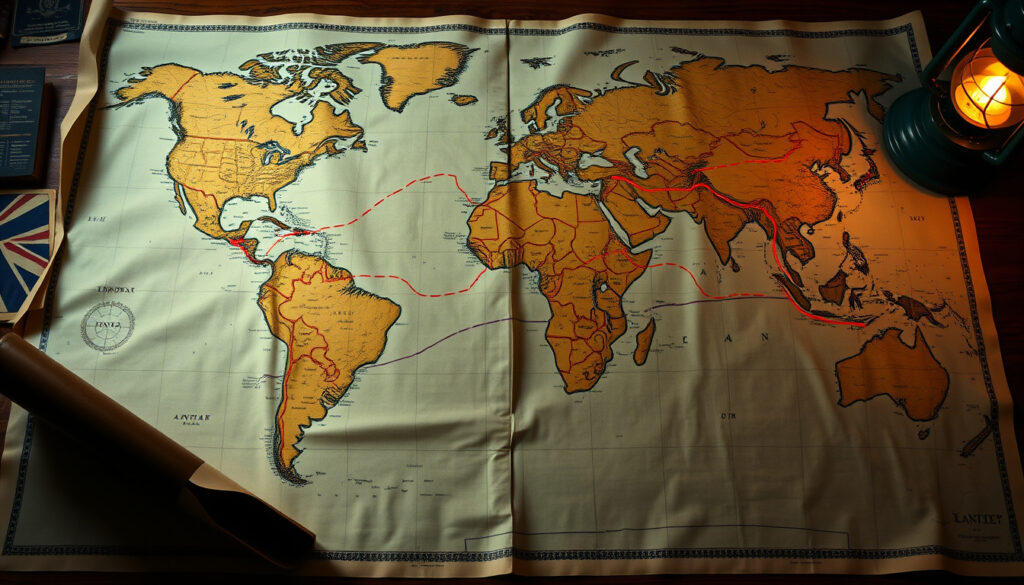
The route Phileas Fogg follows in Around the World in 80 Days represents one of the novel’s most compelling elements, tracing a path that was theoretically possible in the 1870s but required careful coordination of schedules across multiple transportation systems. Beginning in London, Fogg’s journey takes him through France to the Suez Canal, across Egypt, through the Indian Ocean to Bombay, across India by rail, to Hong Kong, to Japan, across the Pacific to America, and finally back to London—though the specific routes and modes of transportation vary depending on circumstances encountered along the way.
The eastward direction of travel proves crucial to the plot’s eventual resolution. When Fogg appears to arrive five minutes late in London—having seemingly lost his wager—the party realizes that their eastward journey around the globe has actually granted them additional time. By traveling eastward, they experienced 80 sunrises and sunsets while London experienced only 79, effectively gaining a full day that allows Fogg to win his wager at the last possible moment.
The journey’s feasibility depended on the remarkable expansion of global transportation networks that occurred during the mid-nineteenth century. Railroads, steamships, and telegraph lines had connected previously isolated regions in ways that made a global circumnavigation conceivable, if still extraordinarily challenging. Verne’s meticulous attention to actual schedules and routes lends the novel a documentary quality that enhances its realism.
Key Destinations Along the Route
The novel’s route includes stops that serve both narrative and cultural functions, introducing readers to the diversity of world civilizations that existed during the height of the British Empire. India features prominently, with Fogg and Passepartout traveling by elephant when their planned rail connection proves unavailable, encountering the young English woman Aouda during a critical moment that transforms the journey from mere wager-chasing into genuine humanitarian action.
The Hong Kong and Japan segments demonstrate Verne’s cosmopolitan vision, treating these Asian destinations as sophisticated cultures rather than exotic backdrops. The American portion of the journey introduces obstacles that reflect the challenges of continental travel in the United States, including a bison herd that blocks the railroad, a failing suspension bridge, and an encounter with Sioux warriors who capture Passepartout before Fogg arranges his rescue.
Modern travelers can trace elements of Fogg’s route using contemporary transportation, though the timelines have compressed dramatically. London to Hong Kong flights now take approximately 12 hours, compared to the days or weeks required for nineteenth-century transit. Similarly, the currency exchanges that Fogg would have encountered have shifted considerably, with Egyptian Pound to GBP rates reflecting nearly a century and a half of economic change since Verne wrote his novel.
The Route’s Lasting Significance
The route in Around the World in 80 Days established a template for literary and cinematic journeys that continues to influence how audiences imagine global adventure. The specific combination of transportation modes—train, ship, elephant, sled, and balloon in various versions—creates variety while maintaining the essential progression around the globe. This geographical specificity grounds the fantastic elements of the story in recognizable reality, allowing readers and viewers to trace their own connections to the places Fogg visits.
Timeline of Major Adaptations
- 1872: Jules Verne publishes Around the World in Eighty Days in France, establishing the story that would become a global cultural phenomenon.
- 1956: Michael Anderson directs the Oscar-winning film adaptation, bringing the story to cinema audiences worldwide with unprecedented production values.
- 2004: A modern action-comedy interpretation featuring international stars reaches audiences in multiple markets simultaneously.
- 2021: BBC and PBS co-produce a prestige television adaptation starring David Tennant, bringing the story to contemporary episodic audiences.
What Is Known and What Remains Unclear
| Established Information | Information That Remains Unclear |
|---|---|
| Jules Verne published the novel in 1872 | Complete cast details for all adaptations |
| The plot centers on Fogg’s £20,000 wager | Specific production budgets for various adaptations |
| The eastward route proves crucial to the resolution | Complete information on video game and cartoon adaptations |
| Multiple adaptations exist across different media | Cantinflas involvement in specific adaptations |
| The 1956 film won significant industry recognition | Broadcast and distribution details for some adaptations |
The Cultural Impact of Around the World in 80 Days
The enduring appeal of Around the World in 80 Days reflects its position as both a pure adventure narrative and a meditation on the possibilities available to methodical, determined individuals. Phileas Fogg’s triumph demonstrates that careful planning and persistent effort can achieve what seems impossible, while his willingness to risk everything on a single wager speaks to the romantic spirit of adventure that continues to captivate audiences across generations and cultures.
The novel arrived at a moment when global connectivity was expanding rapidly, making its vision of circumnavigation simultaneously fantastical and grounded in emerging reality. Verne captured the excitement of an era when the world was shrinking through technological advancement, establishing a template for how adventure stories could celebrate human achievement while exploring cultural diversity.
The adaptation history demonstrates how flexibly the core narrative accommodates different interpretive approaches, from serious literary adaptation to family-oriented action comedy to prestige television drama. Each version adds layers to the cultural presence of the story, creating cumulative meaning that exceeds what any single interpretation could achieve alone.
Unlike most of Jules Verne’s works, Around the World in 80 Days does not qualify as science fiction or fantasy, presenting instead an adventure grounded in the transportation technologies actually available during the Victorian era.
Notable Quotes and Sources
Phileas Fogg, a wealthy London gentleman of meticulous habits, bets £20,000 (half his fortune, equivalent to £2.5 million in 2024) that he can circumnavigate the globe in 80 days or less.
— Wikipedia and Britannica accounts of the novel
The wager is made with fellow members of the Reform Club after reading in The Daily Telegraph that a new railroad in India has made such a journey theoretically possible.
— Britannica summary of the novel’s premise
Summary
Around the World in 80 Days remains a landmark of adventure literature, spawning adaptations that have reached audiences across film, television, and other media for over 150 years. From Jules Verne’s careful attention to real transportation networks to modern prestige television productions, the story of Phileas Fogg’s wager-driven circumnavigation continues to demonstrate how classic narratives can be reimagined while preserving their essential appeal. The novel’s influence extends beyond entertainment, shaping how audiences imagine global adventure and the spirit of calculated risk-taking that drives extraordinary achievement.
Frequently Asked Questions
What video game adaptations of Around the World in 80 Days exist?
Interactive adaptations of the novel have appeared across various gaming platforms, though detailed information about specific titles and release dates requires additional research to confirm accurately.
Are there cartoon versions of Around the World in 80 Days?
Animated adaptations have been produced for younger audiences, bringing the adventure story into formats suited to family viewing, though complete information about specific productions remains limited in current sources.
Did Cantinflas appear in Around the World in 80 Days adaptations?
The Mexican comic actor Cantinflas has been associated with adaptation work in various contexts, though confirming his specific involvement in Around the World in 80 Days adaptations requires additional source verification.
How long did it take to film the 1956 movie?
The production required extensive international filming across multiple continents, though specific production timeline details would need verification from contemporary production records.
Where can I read the original novel online?
The original French text and English translations are available through various public domain sources, with the Project Gutenberg collection offering access to multiple versions of the text.
How accurate is the route described in the novel?
Verne conducted extensive research to ensure the route reflected actual transportation options available in the 1870s, though certain plot elements were necessarily compressed or simplified for narrative purposes.
More related posts
 Craig Revel Horwood – Biography, Net Worth and Strictly Career
 Princess Margaret, Countess of Snowdon – Life, Marriage and Legacy
 Malice (TV Series) – Plot, Cast, Episodes and Guide
 School Holidays UK 2024 – Full Term Dates Guide
 Ironing Service Near Me – Costs, Types and How to Choose
 Prince Harry, Duke of Sussex – Full Biography and Latest News
 Barbara Knox – Age, Net Worth, Children and 2026 Fall Update
 How Much Is State Pension 2025 – Full Rate and Calculator Guide
