
U ed Electric Car for Sale – Be t UK Model Under £5,000
A growing number of UK buyers are turning to the used electric car market, driven by lower running costs, expanding clean air zones, and the availability of older EVs at increasingly accessible prices. While a new electric car remains expensive for many, the second-hand segment now offers genuine bargains — particularly for those willing to consider models with shorter ranges and a focus on battery condition rather than age alone.
According to Auto Trader, the UK market currently lists hundreds of used electric cars under £5,000, with some examples dipping below £3,000. These are typically older vehicles from the early wave of mass-market EVs, and they demand careful scrutiny, especially around battery health and service history. But for the right buyer, they represent a low-cost entry point into electric motoring.
The strongest budget picks, according to UK guides from Drive Green, Top Gear, and Electrifying, include the Nissan Leaf, Renault Zoe, BMW i3, and Kia Soul EV. Among these, the Leaf is repeatedly highlighted as the safest practical all-rounder for the money, with prices starting from around £2,500 for the 24 kWh version.
What Are the Best Used Electric Cars for Sale in the UK?
The following insights summarise the key considerations for anyone shopping in this segment:
- Battery health is the single most important factor — always ask for a battery report or get a diagnostic check before buying.
- Used electric cars can save £500–£1,000 per year in fuel and tax compared to petrol equivalents, based on typical UK driving patterns.
- Older EVs from before 2016 often have a real-world range of 80–100 miles, which is sufficient for city commuting and short trips.
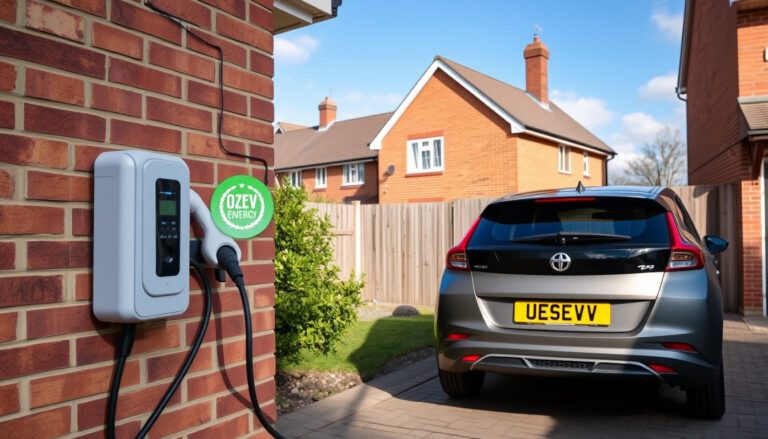
- Check eligibility for home charger grants, such as OZEV schemes that can provide up to £350 toward installation, even for used EV owners.
- Battery ownership matters for the Renault Zoe, as some models were sold with a battery lease that adds a monthly cost.
- Service history and charging behaviour are critical clues to battery condition, especially for cars frequently rapid-charged or stored at low charge.
- Range estimates in guides are approximate; real-world range depends on weather, speed, tyre condition, and degradation.
| Metric | Details |
|---|---|
| Average price (overall) | £12,500 |
| Most popular model | Nissan Leaf |
| Best budget pick under £5,000 | Nissan Leaf (24 kWh) – around 85 mile range |
| EV with lowest depreciation | Tesla Model 3 (but higher upfront cost) |
| Nissan Leaf 24kWh starting price | From £2,500 with around 70 miles range |
| Renault Zoe 22kWh (battery owned) starting price | From £3,000 with around 80 miles range |
| BMW i3 60Ah 22kWh starting price | From £4,500 with around 80 miles range |
| Kia Soul EV 27kWh starting price | From £4,000 with around 90 miles range |
| Nissan Leaf 30kWh starting price | From £3,500 with around 90 miles range |
| Government grants for used EVs | No new grants, but some local schemes exist |
| Auto Trader stock under £5,000 | 196 matched cars listed |
| Example listing: Kia Soul EV 27kWh | £3,995 |
How Much Should You Spend on a Used Electric Car?
Budget is the defining factor for most buyers. The UK market offers clear tiers: under £3,000, between £3,000 and £5,000, and above £5,000. Each bracket brings different trade-offs between range, age, and battery condition.
Used Electric Cars Under £3,000
At the very bottom of the market, options are limited but real. The early Nissan Leaf 24kWh and sometimes the Renault Zoe 22kWh (with owned battery) can be found in this territory. According to Drive Green, these models start from around £2,500 and £3,000 respectively. However, range and battery condition are the biggest risks at this level, and buyers should expect a real-world range closer to 60–70 miles depending on degradation.
Used Electric Cars Under £5,000
This is the sweet spot for budget-conscious buyers. Auto Trader lists 196 electric cars under £5,000, including a Kia Soul EV 27kWh at £3,995 and a Kia e-Niro 40kWh at £4,590. The Nissan Leaf 30kWh, BMW i3, and Kia Soul EV 27kWh are all viable options here, offering ranges of 80–90 miles in real-world conditions. The key is to prioritise battery health over mileage or age.
Battery condition is more important than the asking price. A 24 kWh Nissan Leaf with a healthy battery at £3,000 is a better buy than a 30 kWh Leaf with significant degradation at £3,500. Ask the seller for a battery health report or use a diagnostic tool like LeafSpy to verify state of health.
Used Electric Cars Under £10,000
Moving above £5,000 opens up a much wider choice. Buyers can access later models with larger batteries, better range, and more modern features. The Vauxhall Corsa-e, Hyundai Ioniq, and later Nissan Leaf (40 kWh) become available, along with higher-spec versions of the BMW i3 and Kia Soul EV. These cars typically offer 100–150 miles of real-world range and come with lower battery degradation risk.
Which Used Electric Cars Should You Avoid in the UK?
No model is universally bad, but certain cars and configurations carry higher risks. The UK editorial guidance from Top Gear, Electrifying, and Drive Green points to a few key pitfalls rather than a blacklist of specific models.
Early Mitsubishi i-MiEV and Peugeot iOn / Citroën C-Zero
These small city cars from the early 2010s have very limited range — often 50–60 miles in real-world use — and battery degradation can reduce that further. While they are cheap to buy, their usability is severely restricted, and replacement battery costs can exceed the car’s value.
Volkswagen e-Up! and Similar Small Premium EVs
The e-Up! is well-built but expensive relative to its range. Early models with the 18.7 kWh battery offer only about 80 miles, and prices often stay high due to demand. For the same money, a larger car with better range is usually available.
High-Mileage Tesla Model S
A used Tesla Model S can sometimes be found under £15,000, but the battery replacement cost is significant — often £8,000–£12,000. High-mileage examples with heavy supercharging history may have accelerated degradation, and out-of-warranty repairs can be expensive.
Renault Zoe with Battery Lease
Some Zoes were sold with a battery lease rather than owned battery. This means a monthly fee that adds to the running cost. Buyers should verify whether the battery is owned or leased before committing. The owned-battery versions are the ones recommended in budget guides.
Battery health is the first thing to verify on any older EV. Usable range can be much lower than the original specification, especially on early Leafs and similar models from 2011–2015. Always request a battery health report or use a diagnostic tool. Service history and charging behaviour — such as frequent rapid charging or long periods stored at low charge — are important indicators of battery condition.
Where to Find Used Electric Cars for Sale Near London and Manchester?
The most practical approach for buyers in London and Manchester is to use large UK marketplaces with location-based filters. Inventory changes frequently, and availability varies by city, so a static list is rarely useful.
Auto Trader, the AA, and Cazoo all show broad UK EV stock and allow filtering by postcode or region. Auto Trader, for example, lists 196 cars under £5,000 across the UK, with examples like a Kia Soul EV 27kWh at £3,995 and a Kia e-Niro 40kWh at £4,590. For London and Manchester specifically, applying the location filter on these platforms will show the most current options.
Both cities have strong demand for used EVs due to their clean air zones. London’s Ultra Low Emission Zone (ULEZ) and Manchester’s Clean Air Zone mean that electric cars offer free or reduced-cost access to city centres, which is a significant incentive for buyers in those areas.
Use the location filter on Auto Trader, the AA, or Cazoo to search for EVs near your postcode. The results confirm UK-wide stock but do not provide a static city-by-city list. Searching with a London or Manchester postcode will return the most relevant local inventory.
How Has the Market for Used Electric Cars Developed Over Time?
The used electric car market in the UK has evolved significantly over the past 15 years. Understanding this progression helps buyers contextualise the cars available today.
- 2011–2015: First mass-market EVs — Nissan Leaf, Renault Zoe, and Mitsubishi i-MiEV enter the market. Used prices remain high due to limited supply and novelty factor.
- 2016–2019: Range improves — Batteries grow from 24 kWh to 30–40 kWh in popular models. Used prices drop to the £6,000–£12,000 range as more examples appear on the second-hand market.
- 2020–2022: New EV boom — Demand for new electric cars surges. Used supply increases, but prices hold firm due to strong buyer interest and long wait times for new models.
- 2023–2025: Affordable used EVs under £5,000 — Older Leafs and Zoes become available at budget prices. Awareness of battery degradation and the importance of health checks grows among buyers. The market matures.
What Is Certain and What Remains Uncertain About Used Electric Cars?
Some aspects of buying a used electric car are well established, while others remain unclear even to industry observers. The table below separates what is known from what is still uncertain.
| Established Information | Information That Remains Unclear |
|---|---|
| Battery capacity degrades over time; a 24 kWh Leaf after 8 years typically holds 70–80% of its original capacity. | Resale value evolution depends on battery replacement costs and new model pricing, which are hard to predict. |
| EVs have fewer moving parts, leading to lower maintenance costs — no oil changes, fewer brake replacements. | Long-term reliability of newer models (2022 and later) is still not fully known. |
| Government road tax exemption for zero-emission vehicles continues through 2025. | Future scrappage or grant schemes for used EVs are not confirmed by any official source. |
What Does the Rise of Used Electric Cars Mean for UK Drivers?
The growing availability of used electric cars is reshaping transport choices for households across the UK. When comparing total cost of ownership between a used EV and a petrol car in the same price bracket, the electric car typically wins on fuel and maintenance, though the initial purchase price can still be slightly higher.
Charging infrastructure maturity is a key factor. Buyers with off-street parking and the ability to install a home charger benefit most from the low running costs of an EV. For those relying on public rapid chargers, the cost advantage shrinks, though it remains competitive with petrol in many cases.
The popularity of used EVs in London and Manchester is directly linked to clean air zones. Both cities now have charging networks that make electric driving practical for daily commuting, and the exemption from zone charges adds a financial incentive that petrol and diesel cars cannot match.
Where Can Buyers Find Trusted Information on Used Electric Cars?
Several authoritative sources provide data and guidance for buyers researching used electric cars. The Society of Motor Manufacturers and Traders (SMMT) publishes official UK market statistics that track EV sales and pricing trends. Which? offers consumer-focused reliability surveys and buying advice for used EVs, including model-specific recommendations. Zap-Map maintains detailed data on public charging point locations and availability across the UK, which is useful for assessing local infrastructure.
For battery-specific diagnostics, tools such as LeafSpy allow Nissan Leaf buyers to check the state of health of the battery pack before purchase. Government websites, including GOV.UK, provide official details on ULEZ and Clean Air Zone boundaries and charges.
“Battery health is the single most important factor when buying a used electric car. A car with a well-maintained battery at a fair price is a better long-term investment than a newer model with degraded range.”
— UK automotive editorial guidance, summarised from Drive Green and Top Gear buying guides
“The Nissan Leaf is consistently described as the safest practical all-rounder for budget buyers, appearing in expert lists from £2,500 to £3,500 depending on battery size and condition.”
— Electrifying, Top Gear, and Drive Green (2024–2025)
What Is the Best Approach to Buying a Used Electric Car in the UK?
For buyers seeking the best value, the Nissan Leaf stands out as the most consistently recommended model across UK expert sources. Available from around £2,500 to £3,500 depending on battery size and condition, it offers a practical blend of affordability, reliability, and low running costs. The key is to prioritise battery health above all else, to verify ownership terms for models like the Renault Zoe, and to use location filters on major marketplaces for the most accurate local results. For those considering a home charger, the EV Charger Installers Near Me – OZEV-Approved UK Guide provides useful information on installation grants and approved installers. For a deeper understanding of ongoing costs, the Fuel Cost Calculator UK – Accurate Cost by Reg, Diesel and Van can help compare EV running costs against petrol and diesel vehicles.
Frequently Asked Questions About Used Electric Cars
How long do used electric car batteries last?
Typically 8–15 years depending on model and usage. Ask for a battery health report — tools like LeafSpy are available for Nissan Leaf diagnostics.
Can I get a government grant for a used electric car?
Currently the plug-in car grant only applies to new cars. However, some local councils offer grants for home charger installation.
Is buying a used electric car cheaper than a petrol car?
The initial purchase price can be slightly higher, but running costs for fuel, tax, and maintenance are significantly lower — typically saving £500–£1,000 per year.
Do used electric cars qualify for ULEZ exemption?
Yes, all pure electric cars are ULEZ compliant, including older models from 2011 onwards.
Where can I find used electric cars near me?
Use online platforms such as Auto Trader, Arnold Clark, or Cazoo, and filter by your postcode. These sites update inventory in real time.
What is the cheapest used electric car in the UK?
The Nissan Leaf 24kWh is often the cheapest, starting from around £2,500. Early Renault Zoe models can also be found near £3,000.
Should I buy a used electric car with a battery lease?
Only if the monthly lease cost fits your budget. Owned-battery versions are generally preferred because they avoid an ongoing fee.
How many miles should a used electric car have?
Mileage matters less than battery health. A well-maintained Leaf with 60,000 miles can be a better buy than a low-mileage car with poor charging history.
Do used electric cars need special servicing?
No. EVs have fewer moving parts than petrol cars. Servicing typically involves checking the battery, tyres, brakes, and coolant systems.
What home charger do I need for a used electric car?
A standard 7 kW home charger is suitable for most used EVs. OZEV-approved installers can advise on eligibility for grant support of up to £350.
More related posts
 EV Charger Installers Near Me – OZEV-Approved UK Guide
 Chester Zoo Opening Times – 2026 Schedule, Seasons and Holidays
 UEFA Women’s Champions League Games – 2025/26 Semi-Final Fixtures Results
 C.S. Lewis – Biography, Books, Faith and Death
 Martin Parr – Life, Death, and Legacy of a Photography Icon
 Ironing Service Near Me – Costs, Types and How to Choose
 Blue Sea Club Marthas – Reviews, Rooms and Family Guide
 Why Is My Poop Green – Causes and When to See a Doctor
