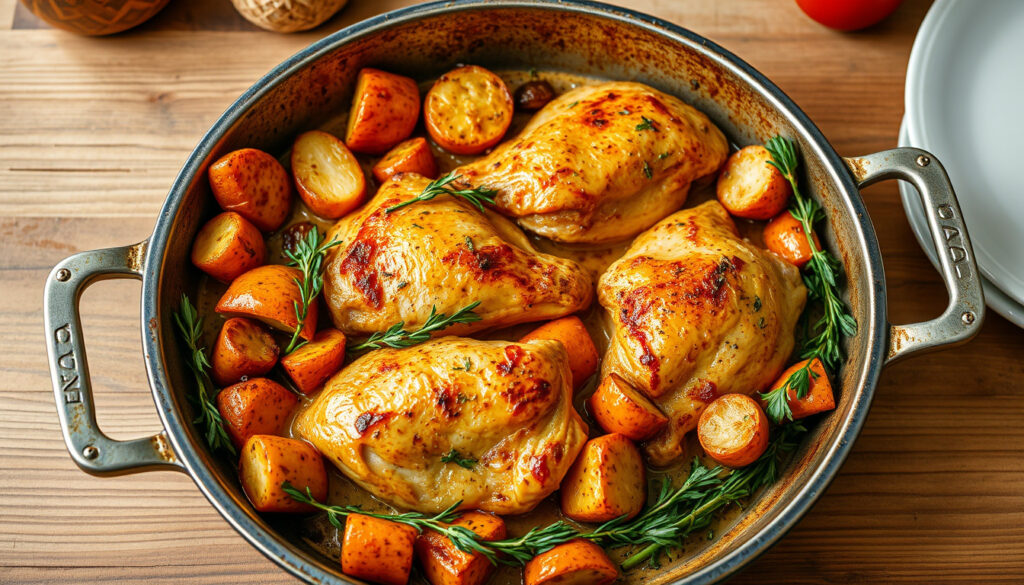
Chicken Thigh Tray Bake – Easy One-Tray Dinner with Crispy Skin
Chicken thigh tray bake is a straightforward one-tray dinner that combines bone-in, skin-on chicken thighs with seasonal vegetables roasted together in a single pan. The method requires minimal preparation, uses straightforward ingredients, and delivers a complete meal with relatively little cleanup. Home cooks appreciate the hands-off cooking process and the way flavors develop as the chicken renders its fat and the vegetables caramelize at high heat.
This cooking approach has become popular across British households because it works equally well for weeknight dinners and more relaxed weekend meals. The tray bake format allows flexibility with vegetables and seasonings, making it easy to adapt based on what is available or preferred. Whether using a simple lemon and thyme combination or a more elaborate Cajun spice blend, the underlying technique remains consistent.
How to Make Chicken Thigh Tray Bake
The foundation of a good chicken thigh tray bake lies in selecting the right chicken pieces and preparing them correctly before they reach the oven. Bone-in, skin-on chicken thighs produce superior results compared to boneless cuts, as the bone helps retain moisture while the skin crisps effectively under high heat Jamie Oliver’s approach demonstrates this principle across his tray bake recipes.
- Pat chicken thighs completely dry before seasoning to ensure crispy skin
- Position thighs skin-side up to allow fat to render and skin to brown
- Avoid overcrowding the tray, as this causes steaming rather than roasting
- Use a thermometer to verify the chicken reaches safe internal temperature
- Let the dish rest for five minutes before serving to redistribute juices
- Bone-in thighs stay juicier and crisp better than boneless cuts
| Nutrient | Per Serving | Unit |
|---|---|---|
| Calories | 512 | kcal |
| Protein | 35-40 | g |
| Fat | 28-32 | g |
| Carbs | 18-25 | g |
Seasoning and Preparation Basics
Effective seasoning begins with thorough drying of the chicken thighs using paper towels. Once dry, the skin should be lightly coated with olive oil before applying salt, pepper, and any additional spices. The seasoning adheres better to oiled skin, and the oil helps conduct heat evenly across the surface.
Potatoes typically require parboiling or cutting into small pieces to ensure they cook through within the overall time frame. Hardy vegetables like onions and peppers can go directly onto the tray, while softer items such as cherry tomatoes and courgette should wait until the midway point to prevent them from disintegrating.
Best Temperature and Cooking Time for Chicken Thigh Tray Bake
Most recipes direct home cooks to preheat the oven to between 200°C and 210°C for conventional cooking, which translates to roughly 390°F to 410°F. Some recipes specify slightly lower temperatures around 180°C to 190°C when using a fan oven, though the higher end of the range generally produces better skin crisping BBC Good Food’s cooking time guide provides additional context for these temperature variations.
Oven temperatures can vary by as much as 15°C between different models. Using an oven thermometer helps ensure accuracy, particularly for recipes where precise doneness matters.
Understanding Doneness and Safety
The safest approach to verifying doneness involves using a meat thermometer inserted into the thickest part of the thigh without touching bone. The chicken is safe to eat once it reaches an internal temperature of 75°C, which effectively eliminates harmful bacteria USDA food safety guidelines confirm this temperature as the standard for poultry.
Visual indicators supplement thermometer readings. The skin should appear golden brown and crispy, the juices should run clear rather than pink, and the meat should pull easily from the bone. When these signs align with the temperature reading, the chicken is ready.
| Component | Total Time | Doneness Check |
|---|---|---|
| Potatoes and onions | 40-60 minutes | Fork-tender with charred edges |
| Bone-in chicken thighs | 40-60 minutes | 75°C internal; juices clear |
| Softer vegetables | Add after 20-30 mins | Soft and blistered |
Achieving Crispy Skin
Crispy skin results from a combination of factors: thorough drying before cooking, positioning the chicken skin-side up, maintaining high oven heat, and allowing air circulation around each piece. Uncovering the tray for the final 20 to 40 minutes of cooking accelerates moisture evaporation from the skin surface.
Overcrowding remains the most common obstacle to crispy skin. When pieces sit too close together, steam escapes and settles on the skin, preventing browning. Using a sufficiently large tray or cooking in batches ensures proper heat distribution.
Dry thoroughly, oil lightly, skin-side up, high heat, uncovered finish. These five steps consistently produce the crispy result most home cooks expect from a tray bake.
Perfect Vegetables and Ingredients for Chicken Thigh Tray Bake
The vegetable component of a tray bake serves both practical and flavor purposes. Vegetables placed beneath the chicken absorb dripping fats and juices, developing rich flavor as they roast. Hardy root vegetables and alliums work best as the foundation, while more delicate items join later in the cooking process.
Essential Vegetables and Their Timing
Baby potatoes, whether halved or left whole, form a reliable base that cooks through within the standard 40 to 60 minute window. Red onions, quartered or sliced, caramelize and sweeten as they roast. Bell peppers, cherry tomatoes, courgette, Brussels sprouts, and artichokes all work well, with timing adjusted so softer vegetables do not overcook Greek-style variations demonstrate this layering approach effectively.
- New potatoes or baby potatoes suit the cooking timeline best
- Red onions caramelize well at high temperatures
- Add peppers and tomatoes after 20-30 minutes to prevent collapse
- Courgette and softer greens go in during the final stage only
- Brussels sprouts and artichokes can handle full cooking time
- Artichoke hearts add Mediterranean character to the dish
Oils and Marinades
Olive oil remains the primary fat choice for most tray bake recipes, typically used at 1 to 2 tablespoons for coating vegetables and rubbing the chicken skin. The oil carries flavor from herbs and spices while preventing sticking and promoting browning. Some recipes incorporate butter for additional richness, particularly in comfort-focused versions comfort-oriented preparations often feature this substitution.
Marinades and sauces introduce additional flavor dimensions. Common combinations include lemon juice with garlic, honey with mustard, soy sauce with ginger, or vinegar-based blends. These can be applied before cooking or poured over the tray during the final basting stage. Preparations like honey mustard variations show how sweet and savory elements balance together.
Fresh herbs like thyme, rosemary, and oregano release their oils more effectively when added partway through cooking rather than at the start. Lemons chopped or wedged add brightness without overwhelming the dish.
Popular Variations Including Jamie Oliver and Other Chefs
British chefs have contributed numerous interpretations of the tray bake format. Jamie Oliver’s Cajun chicken tray bake incorporates bold spices with peppers, onions, and garlic, sometimes adding rice during cooking for a complete meal. His approach emphasizes using quality seasonings and cooking at sufficient heat to develop color and flavor.
Mediterranean and Regional Styles
Greek-inspired versions feature paprika, oregano, olives, and feta cheese, creating a bright, tangy profile. Italian variations might include pancetta, tomatoes, and chili for an Amatriciana-style interpretation. BBQ adaptations adjust the method for outdoor cooking, typically requiring 220°C indirect heat for 30 to 35 minutes.
Healthy adaptations emphasize skin-on chicken for flavor while trimming excess fat, using minimal oil, and incorporating vegetables for additional fiber and nutrients. These preparations accommodate various dietary requirements including gluten-free, dairy-free, and low-carb eating patterns Whole30 and paleo versions demonstrate how the format adapts to structured eating plans.
- Greek style: paprika, oregano, olives, feta cheese
- Italian style: pancetta, tomatoes, chili, white wine
- Cajun style: bold spices, peppers, rice addition
- Lemon-herb style: thyme, rosemary, garlic, lemon
- Honey-mustard style: sweet glaze with savory undertones
- BBQ style: 220°C indirect heat, 30-35 minutes
- Mediterranean style: artichokes, sun-dried tomatoes
Step-by-Step Cooking Timeline
Understanding the sequence of events during cooking helps home cooks achieve consistent results. The process divides naturally into distinct phases, each with specific objectives and visual markers for progression.
- Preheat oven to 200-210°C
- Prepare tray: toss hardy vegetables with oil and seasonings, position chicken among veggies
- Initial bake: roast covered or uncovered to render fat and begin skin crisping
- Add softer vegetables and any marinade or sauce
- Final bake uncovered until chicken reaches 75°C internal temperature
- Rest for five minutes before serving with optional garnishes
Total active time varies between 40 and 60 minutes depending on oven characteristics and chicken size. Larger thighs may require the full duration, while smaller pieces often finish earlier. Checking the internal temperature rather than relying solely on timing provides the most reliable doneness indicator.
What We Know and What Remains Unclear
The 75°C internal temperature requirement is well-established and non-negotiable for food safety. Always use a meat thermometer rather than guessing to avoid undercooking.
| Established Information | Where Variation Occurs |
|---|---|
| Safe internal temp: 75°C (165°F) | Oven calibration varies ±15°C between models |
| Bone-in produces juicier results | Actual cook times differ by 5-10 minutes based on size |
| High heat crisps skin effectively | Specific timing depends on chicken dimensions |
| Rest time improves juiciness | Optimal rest periods vary by cut and preferences |
Research confirms that bone-in, skin-on thighs produce superior texture compared to boneless cuts. Similarly, the relationship between thorough drying and skin crispiness is well-documented across multiple sources. However, precise timing varies considerably based on individual oven characteristics, initial chicken temperature, and the specific dimensions of the pieces being cooked.
Oven variations account for much of the unpredictability in home cooking. A unit running hot will finish dishes faster than expected, while a cool oven delays doneness. This uncertainty is why professional sources consistently recommend thermometer verification rather than clock-watching.
Why Tray Bake Format Works Well
The single-tray approach addresses several practical concerns that make weeknight cooking challenging. Cleanup requires only a roasting tray, tongs, and any serving dishes. The cooking process requires minimal active attention once the tray enters the oven, freeing the cook to prepare side dishes or attend to other tasks.
Flavor development benefits from the method as well. As chicken fat renders, it drips onto the vegetables below, basting them in rich, savory juices. The vegetables, in turn, create a raised platform that promotes airflow around the chicken pieces. This interaction between protein and produce creates layers of flavor that a more complicated preparation might miss budget-friendly implementations of this principle show how simple techniques yield satisfying results.
Common Mistakes to Avoid
Overcrowding remains the most frequently encountered error. Pieces stacked too closely together steam rather than roast, resulting in rubbery skin and underdone vegetables. Using a tray with insufficient rim depth causes dripping that creates smoke and wastes flavorful juices.
Starting with refrigerated chicken rather than allowing it to reach room temperature extends cooking time and produces uneven results. Similarly, failing to pat the chicken dry removes the foundation upon which crispy skin develops.
Expert Sources and Credibility
Recipe development for tray bakes draws from established culinary principles and food safety research. Government food safety agencies provide the authoritative guidance on cooking temperatures, while professional chefs contribute techniques refined through restaurant cooking experience.
One-tray cooking saves time without sacrificing flavor when done properly. The key lies in understanding how heat works and respecting the cooking process rather than rushing it.
Resources like the Food Standards Agency provide specific guidance for UK consumers, while nutritional databases offer data for those tracking dietary intake. Combining these authoritative sources with practical recipe testing produces reliable guidance for home cooks.
Summary
Chicken thigh tray bake offers a practical path to a satisfying complete meal with modest effort and minimal cleanup. Success depends on selecting bone-in, skin-on thighs, using high oven heat, and verifying doneness with a thermometer. Vegetables can be customized to preference and season, while marinades and seasonings add variety across multiple preparations. The method accommodates various dietary approaches and skill levels, making it a versatile option for regular rotation.
Those interested in preserving leftover chicken may find guidance in resources covering how to freeze cooked chicken, while complementary bread options like flatbread prepared on the stovetop expand serving possibilities.
Frequently Asked Questions
Is chicken thigh tray bake healthy?
Chicken thigh tray bake provides lean protein from the thighs and fiber from vegetables. Using minimal oil and trimming excess skin can reduce fat content while maintaining flavor. The preparation accommodates various dietary needs including low-carb, keto, and paleo approaches.
How many calories are in a chicken thigh tray bake?
A typical serving contains approximately 512 calories when prepared with butter, though this varies based on specific ingredients and portion sizes. Removing excess skin or reducing oil decreases the calorie count.
Can I use boneless chicken thighs instead?
Boneless thighs work but cook five to ten minutes faster and produce less juicy results than bone-in pieces. Adjust timing accordingly and expect the meat to dry out more quickly if overcooked.
What potatoes work best for tray bakes?
Baby potatoes or new potatoes suit this method well, either halved or left whole depending on size. They cook through within the standard timeframe while developing crispy edges when exposed to direct heat.
How do I prevent the vegetables from burning?
Positioning harder vegetables beneath the chicken allows them to cook in rendered fat without direct exposure to intense heat. Adding softer vegetables midway through cooking prevents them from charring beyond recovery.
Can I prepare this dish ahead of time?
Marinating the chicken overnight develops deeper flavor without additional effort. Vegetables can be chopped and seasoned earlier, though assembly should occur close to cooking time for optimal texture.
What internal temperature must the chicken reach?
The chicken is safe when the internal temperature reaches 75°C measured at the thickest point without touching bone. Visual indicators like clear juices and loose meat from the bone support this reading.
More related posts
 Cirrhosis of the Liver – Symptoms, Causes, Stages, Treatment
 Inbetweeners Jay – Complete Guide to Character and Actor
 2026 Bank Holidays UK – Full Regional Dates Guide
 Greater Anglia Delay Repay – Complete Guide to Claiming Compensation
 The Walking Dead Daryl Dixon – Seasons, Cast, Plot and Where to Watch
 Nestle Frosted Shreddies Cereal Recall – Affected Batches and Refunds
 Turkey National Football Team Games – Full 2025/2026 Fixtures and Results
 Turkey Tail Mushroom Benefits – Evidence on Immunity and Cancer Support
