How to Make Flatbread – Easy No-Yeast Stovetop Recipe
Fresh flatbread requires no yeast, no oven, and barely twenty minutes from mixing to serving. Home cooks seeking immediate results have embraced this ancient technique, combining flour, water, and chemical leavening into pliable rounds cooked directly on the stovetop.
The appeal lies in pantry simplicity. Unlike traditional loaves demanding hours of proofing, these quick breads rely on baking powder to create immediate lift. A Virtual Vegan documents how this method produces soft, versatile bases suitable for wraps, dips, or pizza without specialized equipment.
Whether avoiding yeast due to dietary restrictions or simply lacking time, mastering this fundamental dough opens immediate culinary possibilities.
How to Make Flatbread from Scratch: Easy Recipe
10 mins
10 mins
8 flatbreads
Beginner
Domestic Gothess confirms that a standard batch yields six to eight soft, pliable pieces perfect for immediate consumption.
- No yeast required—chemical leavening provides immediate rise
- Pan-cooking mimics tandoor results without specialized equipment
- Dough requires only 15-30 minutes of rest, not hours
- Customizable with herbs, spices, or whole grain flours
- Functions as wraps, pizza bases, or accompaniment to dips
- Stores at room temperature for two to three days
| Ingredient | Quantity | Purpose |
|---|---|---|
| All-purpose flour | 2-4 cups | Structure and body |
| Baking powder | 1-2 tsp | Essential chemical leavening |
| Baking soda | ½-1 tsp (optional) | Additional fluffiness |
| Salt | 1 tsp | Flavor enhancement |
| Sugar | 1 tsp (optional) | Flavor balance |
| Oil | 2-4 tbsp (optional) | Tenderness and pliability |
| Water or plant milk | 1-1¼ cups | Hydration and binding |
No Yeast Flatbread Recipe
Eliminating yeast changes the chemistry but not the satisfying texture. Baking powder contains both acid and base components that react when moistened and heated, producing carbon dioxide bubbles instantly.
This reaction occurs rapidly. The dough expands during the brief cooking period rather than during a prolonged proofing stage. Veganosity demonstrates that adding garlic powder or herbs to the dry mix creates aromatic variations without complicating the process.
Baking powder reacts immediately when hydrated and heated, producing carbon dioxide that creates air pockets. Unlike yeast fermentation, this chemical reaction completes during cooking, eliminating rising periods entirely.
Ingredient Functions Without Yeast
Flour provides gluten structure, while baking powder creates lift. Optional baking soda increases alkalinity, encouraging faster browning and a more open crumb. Oil coats gluten strands, limiting toughness and extending shelf life.
How to Cook Flatbread: Pan, Oven, and More
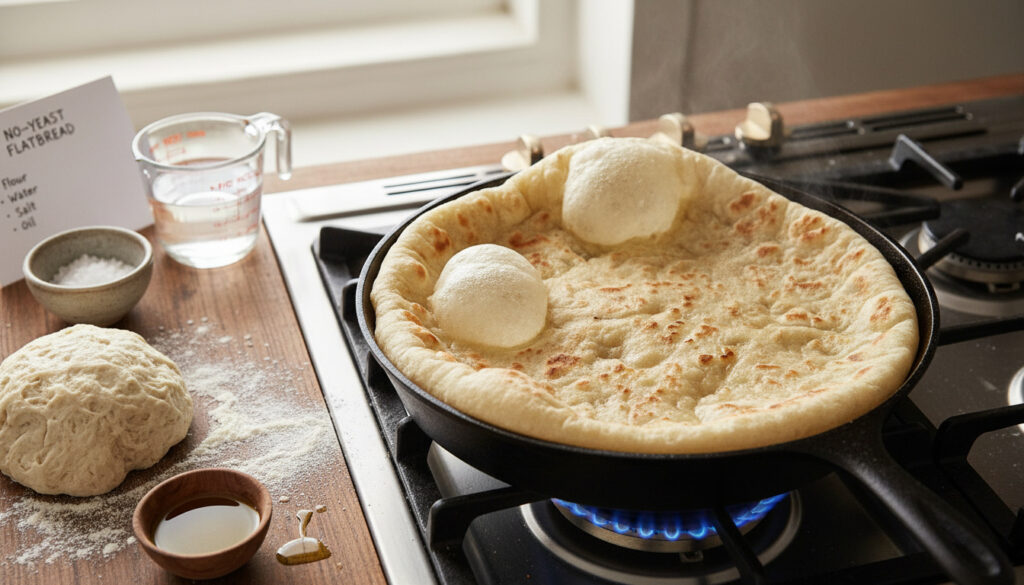
Stovetop cooking delivers superior texture for this particular dough. Dry or lightly oiled cast iron provides the intense, even heat necessary for the characteristic spotted appearance.
Medium-high heat proves optimal. Settings too low produce dense, pale results; excessive heat chars the exterior before the interior cooks through.
Skillet Technique
Heat the pan until a droplet of water sizzles immediately. Roll dough to uniform thickness—approximately three to five millimeters—and lay it flat without stretching. Well Vegan recommends covering cooked flatbreads with a clean towel immediately to trap steam and maintain softness.
Bubbles forming on the surface indicate readiness for flipping. Each side requires roughly ninety seconds to two minutes. The finished bread should display golden-brown spots and retain flexibility when bent.
Timing Considerations
Total active cooking time spans approximately ten minutes for a full batch. Resting the cooked stack for five minutes wrapped in cloth improves texture further.
Flatbread Variations and Pro Tips
The base recipe accommodates numerous modifications. Veggie Society incorporates one to two cups of cooled mashed potatoes, reducing liquid and creating a chewy, substantial texture suitable for whole wheat, spelt, or chickpea flour substitutions.
Vegan Adaptations
The standard formulation remains inherently vegan when using plant milk or water. The Vegan 8 demonstrates that omitting oil entirely produces acceptable results, though the texture becomes slightly less tender.
Cast iron retains intense heat. If initial pieces char within thirty seconds, reduce the temperature and allow the pan to stabilize before continuing with subsequent batches.
Troubleshooting Common Issues
| Issue | Cause | Solution |
|---|---|---|
| Excessive stickiness | Over-hydration | Add flour one tablespoon at a time during kneading |
| Cracking or dryness | Insufficient liquid or over-kneading | Add water one teaspoon at a time; limit kneading to five minutes |
| Dense texture | Inadequate rest or weak leavener | Rest dough fifteen to thirty minutes; verify baking powder freshness |
| Tearing while rolling | Insufficient rest or dry dough | Extend rest period; flour surface liberally |
| Failure to puff | Cold pan or uneven thickness | Ensure skillet reaches proper temperature; roll evenly |
Step-by-Step Timeline: From Mixing to Serving
- Mixing (2 minutes): Combine dry ingredients thoroughly before adding liquids.
- Hydration (2 minutes): Stir in three-quarters of the liquid initially, adding remainder gradually to achieve tacky consistency.
- Kneading (3 minutes): Work dough on a floured surface until smooth and elastic.
- Resting (15-30 minutes): Cover and allow gluten relaxation for improved pliability.
- Shaping (5 minutes): Divide into portions and roll into thin rounds.
- Cooking (10 minutes): Pan-fry each piece one to two minutes per side until spotted and puffed.
RecipeTin Eats notes that resting proves optional but significantly improves handling characteristics.
What Works Consistently vs. What Varies
| Established Principles | Variable Factors |
|---|---|
| Baking powder quantity (1-2 tsp per 2-4 cups flour) | Exact hydration levels depending on flour brand and humidity |
| 1-2 minutes cooking per side at medium-high heat | Stovetop heat output variations between gas and electric |
| 15-30 minute rest period improves elasticity | Altitude adjustments affecting leavening effectiveness |
| Stacking cooked breads retains moisture | Room temperature affecting dough behavior |
The Ancient Roots of Modern Quick Flatbread
Unleavened breads predate recorded history across multiple continents. Mesoamerican tortillas, South Asian chapati, and Jewish matzo represent distinct cultural solutions to the need for immediate, portable carbohydrates.
Contemporary no-yeast versions surged in popularity during 2020 yeast shortages, emphasizing pantry staples. 11 Stone in Pounds – Exact 154 lb Conversion Guide provides additional measurement clarity for international readers adapting recipes.
These preparations remain staples throughout Mediterranean, Middle Eastern, and South Asian cuisines, serving as foundational elements for wraps, dips, and sandwich bases.
Attribution and Culinary Authority
This methodology synthesizes tested approaches from multiple culinary sources. Melissa’s easy flatbreads established the resting period importance, while specialized vegan adaptations appear in dedicated plant-based recipe collections.
Freshness depends entirely on immediate consumption; these breads lack preservatives and stale rapidly when exposed to air.
— Culinary testing protocols, multiple sources
Key Takeaways for Home Bakers
Successful flatbread requires only fundamental pantry ingredients and a hot pan. The absence of yeast eliminates waiting periods, producing immediate results suitable for emergency meals or planned gatherings. Proper heat management and brief resting periods distinguish acceptable results from exceptional ones. School Holidays UK 2024 – Full Term Dates Guide offers scheduling context for planning cooking activities with family.
Frequently Asked Questions
Why does my flatbread turn out hard?
Over-kneading or insufficient liquid creates toughness. Limit kneading to five minutes and ensure the dough feels tacky, not dry, before resting.
Can I freeze homemade flatbread?
Yes. Stack cooled flatbreads with parchment paper between layers and freeze up to three months. Thaw and reheat in a dry skillet to restore texture.
Is flatbread naturally vegan?
The basic recipe requires only flour, water, salt, and baking powder. Replace any animal milk with water or plant milk to ensure vegan compatibility.
What’s the difference between flatbread and tortilla?
Tortillas traditionally use nixtamalized corn or wheat flour without leavening, while this flatbread incorporates baking powder for slight puffing and softer texture.
How do I reheat flatbread without drying it?
Dampen the surface slightly with water and heat in a covered skillet over medium heat for thirty seconds per side, or wrap in foil with a damp paper towel.
Can I substitute gluten-free flour?
Yes, though texture changes significantly. Use a 1:1 gluten-free blend containing xanthan gum, and expect more delicate breads requiring careful handling.
More related posts
 Malice (TV Series) – Plot, Cast, Episodes and Guide
 How Many Bank Holidays in 2024 – UK Counts by Nation
 Grow a Garden Codes – Active List April 2026
 Handmaid’s Tale Season 6 – Release, Cast and What to Expect
 Princess Margaret, Countess of Snowdon – Life, Marriage and Legacy
 London to Hong Kong – Flight Time, Airlines and Tips
 Grand Opera House Belfast – Seating Plan, Events & Visitor Guide
 Rachel Riley – Complete Biography, Career, and Personal Life
