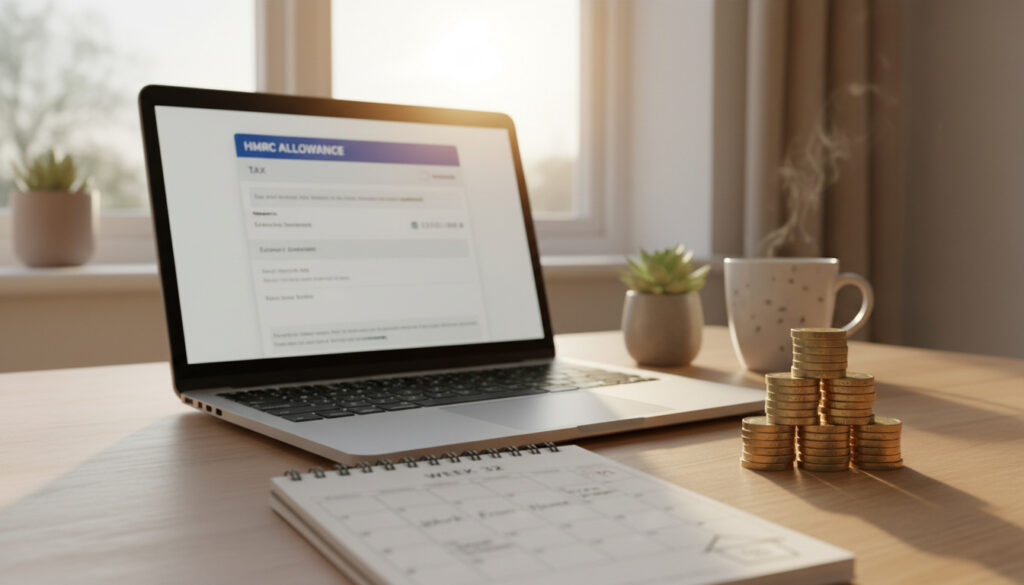
Work From Home Tax Relief – Claim £6 Weekly HMRC Allowance
HMRC permits employees to claim tax relief for additional household costs incurred when working from home, though stringent eligibility criteria determine who qualifies. The relief addresses expenses such as heating, electricity, and internet usage that increase due to regular remote work arrangements mandated by employers.
The distinction between voluntary remote work and employer-mandated homeworking remains the critical factor governing access to these tax benefits. Understanding the specific requirements, calculation methods, and documentation standards proves essential for employees seeking to recover these costs through the UK tax system.
Can I claim tax relief for working from home?
Tax relief for working from home is only available when your employer requires you to work from home, not when you choose to do so voluntarily. You must work from home regularly, performing substantive duties rather than occasionally checking emails, and have no suitable alternative workplace available.
Key insights on eligibility and claims:
- Voluntary arrangements where your contract allows but does not require home working do not qualify for relief.
- The simplified £6 weekly method requires no receipt documentation, making it accessible for most eligible employees.
- Self-employed individuals operate under separate simplified expense tables based on monthly hours worked.
- Claims can be backdated for up to four tax years if you worked from home during previous periods but never claimed.
- Since April 6, 2023, you can only claim for specific weeks you were required to work from home, not entire tax years.
- Employers may pay £6 per week tax-free directly, potentially eliminating the need for personal claims.
- Eligibility tightened significantly from the pandemic-era 2020/2021 and 2021/2022 rules.
| Fact | Details | Source Attribution |
|---|---|---|
| Eligibility trigger | Employer mandate required; voluntary choice excluded | HMRC Official Guidance |
| Weekly simplified rate | £6 per week (£312 annually) | HMRC Official Guidance |
| Basic rate taxpayer relief | £62.40 annually (20% of £312) | AC Accounts Analysis |
| Higher rate taxpayer relief | £124.80 annually (40% of £312) | MCC Partners Advisory |
| Backdating limit | Up to four previous tax years | MCC Partners Advisory |
| Self-employed monthly rates | £10-£26 depending on hours | MCC Partners Advisory |
| Employer tax-free allowance | £6 per week (£26 monthly) | AC Accounts Advisory |
| Receipt requirement (simplified) | No documentation required | Audit Consulting Group |
How much tax relief for working from home?
HMRC offers two distinct methods for calculating work from home tax relief: the simplified flat rate approach requiring no evidence, and the actual costs method demanding detailed documentation. The appropriate choice depends on whether your additional household expenses significantly exceed the standard £312 annual allowance.
The simplified flat rate method
The simplified approach allows employees to claim £6 per week (£312 per year) without retaining receipts or calculating precise expense proportions. This method suits those with modest additional costs who prefer minimal administrative burden. The actual tax reduction depends on your income tax band—basic rate taxpayers save £62.40 annually, while higher rate taxpayers receive £124.80 relief.
Employers can pay employees up to £6 per week (£26 per month) tax-free to cover additional household expenses. Payments at or below this threshold require no record-keeping from either party, though amounts exceeding this limit demand additional administration and evidence of actual costs incurred.
Calculating actual costs
Employees with substantial additional expenses may claim specific amounts based on actual household bills including electricity, heating, gas, internet, metered water, and business phone calls. You must calculate the proportion of your home used for work—for instance, using one room of five exclusively for work half the time permits claiming 10% of relevant bills. This method requires retaining receipts, bills, and documentation proving the expense directly relates to work activities.
For example, if you pay basic rate tax and claim £6 per week through the simplified method, you receive £1.20 per week in actual tax relief, while higher rate taxpayers receive £2.40 weekly. Those claiming actual costs must provide evidence such as utility bills alongside their claim submission to HMRC.
How do I claim work from home tax relief?
Submitting a claim requires demonstrating that your employer mandates working from home, either through your employment contract or official policy documentation. The submission route depends on whether you already complete annual Self Assessment tax returns.
Required documentation and evidence
You must provide evidence proving you are required to work from home, such as a copy of your employment contract showing the homeworking requirement or a letter from your employer confirming the arrangement. For those claiming actual costs rather than the flat rate, receipts or bills showing specific amounts spent on eligible expenses become mandatory.
Employees who worked from home during previous tax years but never claimed relief may backdate claims for up to four years. This retrospective claiming applies only to periods meeting the eligibility criteria at that time—specifically, when your employer required you to work from home regularly.
Submitting your claim to HMRC
Claims are typically processed through Self Assessment tax returns for those already filing annually, or by contacting HMRC directly to adjust your tax code for the current year. Work From Home Tax Relief – Who Qualifies and How to Claim provides additional context on qualifying arrangements. From April 6, 2023, you can only claim for the weeks you have to work from home, rather than claiming for the entire tax year if you worked from home for only part of it.
Can self-employed claim more for home office?
Self-employed individuals and freelancers operate under different rules than employees, utilizing simplified expenses based on hours worked from home each month rather than flat weekly rates.
Simplified expenses for freelancers
Self-employed workers using the simplified expenses method can claim based on hours worked from home monthly: 25-50 hours permits £10 per month (£120 annually), 51-100 hours allows £18 per month (£216 annually), and 101 or more hours qualifies for £26 per month (£312 annually). This method requires no receipts or complex calculations, though actual costs may prove more advantageous for those with significant home office expenses.
You cannot claim tax relief if you choose to work from home because your employment contract allows it, or if your employer has an office but you simply prefer working from home. Similarly, if your employer has an office at full capacity and you cannot access it sometimes, this does not qualify you for relief.
Interaction with employer-provided equipment
Tax relief for working from home covers additional household costs, not equipment your employer provides. If your employer supplies computers, furniture, or other tools necessary for your role, these items do not factor into your personal tax relief calculations. Road Tax Price Check – UK 2025 Rates and Free Calculator illustrates how different UK tax reliefs operate under specific qualifying conditions.
What are the key dates for work from home tax relief?
The evolution of home working tax relief reflects shifting workplace patterns and fiscal policy adjustments over recent tax years.
- Emergency work from home tax relief introduced post-COVID, allowing widespread claims during mandatory lockdowns.
- £6 weekly rate confirmed as standard, with temporary pandemic flexibility beginning to tighten.
- HMRC updated eligibility requirements, removing blanket COVID coverage and requiring specific employer mandates for each week claimed.
- Current framework maintained with strict criteria distinguishing voluntary from mandated remote work.
- Claims must be submitted by the standard tax return deadline of five April following the relevant tax year, with backdating available for four previous years.
What remains certain and unclear about qualifying?
| Established Information | Information Requiring Clarification |
|---|---|
| Employer mandate is absolutely required—voluntary choices never qualify. | Borderline determinations of what constitutes “substantive” work versus occasional email checking. |
| The £6 weekly simplified rate requires zero documentation. | Precise calculations for actual costs when rooms serve mixed personal and professional purposes. |
| Four-year backdating is consistently permitted for eligible periods. | Future policy changes beyond the 2024/25 tax year remain unannounced. |
| Self-employed simplified expenses follow strict hourly bands. | Specific evidentiary standards for “no suitable alternative workplace” assessments. |
How does HMRC working from home relief fit within UK tax policy?
The work from home tax relief scheme represents a targeted mechanism within broader UK employment tax policy, designed to offset genuine cost increases incurred by employees following employer directives. Unlike general employment expenses, this relief specifically addresses the domestic cost implications of remote work arrangements that have become entrenched in British working culture since 2020.
The tightening of eligibility from April 2023 signals HMRC’s intent to refocus the relief on traditional homeworking arrangements—such as field sales representatives or remote workers living far from offices—rather than accommodating the widespread voluntary remote work adopted during the pandemic. This distinction maintains the relief’s integrity as compensation for employer-mandated inconvenience rather than a general subsidy for flexible working preferences.
For self-employed individuals, the simplified expenses system integrates with broader cash basis accounting options, offering administrative efficiency for micro-businesses while ensuring tax relief reflects genuine business use of domestic premises. The Freshbooks tax guidance notes that these separate tracks for employees and self-employed reflect distinct employment relationships and cost structures within the UK economy.
What do HMRC and tax professionals advise?
Tax relief for working from home is only available if your employer requires you to work from home—not if you choose to do so voluntarily.
HMRC Official Guidance, GOV.UK
Working from home must be substantive (not just occasionally checking emails) and you must have no suitable alternative workplace available.
MCC Partners Tax Advisory
If you use one room out of five in your home for work half the time, you can claim 10% of relevant bills.
Audit Consulting Group
What are the essential steps to secure relief?
Verify your employer formally requires you to work from home, select between the simplified £6 weekly rate or actual costs method based on your expense levels, gather necessary documentation if claiming actual amounts, and submit your claim through Self Assessment or direct HMRC contact before the relevant deadline. For those uncertain about specific calculations, consulting 1st Formations expense guidance provides detailed breakdowns of eligible household costs.
Common questions about home office claims
Do I need receipts for WFH tax relief?
No receipts are required for the simplified £6 weekly method. However, if claiming actual costs based on specific household bills, you must provide receipts or documentation as evidence.
Work from home tax relief vs travel expenses
Travel expenses between home and a permanent workplace are generally not tax deductible, whereas work from home tax relief covers additional household costs like heating and electricity incurred while working remotely.
Tax relief if employer provides equipment
If your employer provides necessary equipment such as computers or furniture, you cannot claim tax relief on these items. Relief only applies to additional household expenses you personally incur.
Can I claim if my employer pays me already?
If your employer pays you £6 per week or less tax-free for working from home expenses, you cannot claim additional relief. If they pay less than £6, you can claim the difference.
What happens if I claim incorrectly?
HMRC may request repayment of incorrectly claimed amounts with potential interest charges. Ensure you maintain evidence of your employer’s homeworking requirement and actual expense documentation where applicable.
Can I claim for just one day per week at home?
You can claim for specific weeks you are required to work from home. If working from home one day per week is a regular requirement under your contract, you may claim for those specific weeks.
Does internet usage qualify for relief?
Yes, internet costs qualify under the actual costs method if you can demonstrate the proportion used for work. The simplified £6 weekly rate inherently includes an allowance for such costs without requiring specific calculations.
More related posts
 Epic Books – Complete Review for Parents and Teachers
 Ironing Service Near Me – Costs, Types and How to Choose
 Manchester United vs Burnley – Head-to-Head Record and Results (2025)
 M&S Food – Premium Quality, Delivery and Top Products
 Xbox Game Pass Price Increase – UK Rollback, Europe Hikes
 Munya Chawawa – Age, Height, Career, and Key Facts
 Newspaper Front Pages Tomorrow – Preview UK US Headlines
 TUI Discount Code 2025 – Save Up to £400 on Holidays
