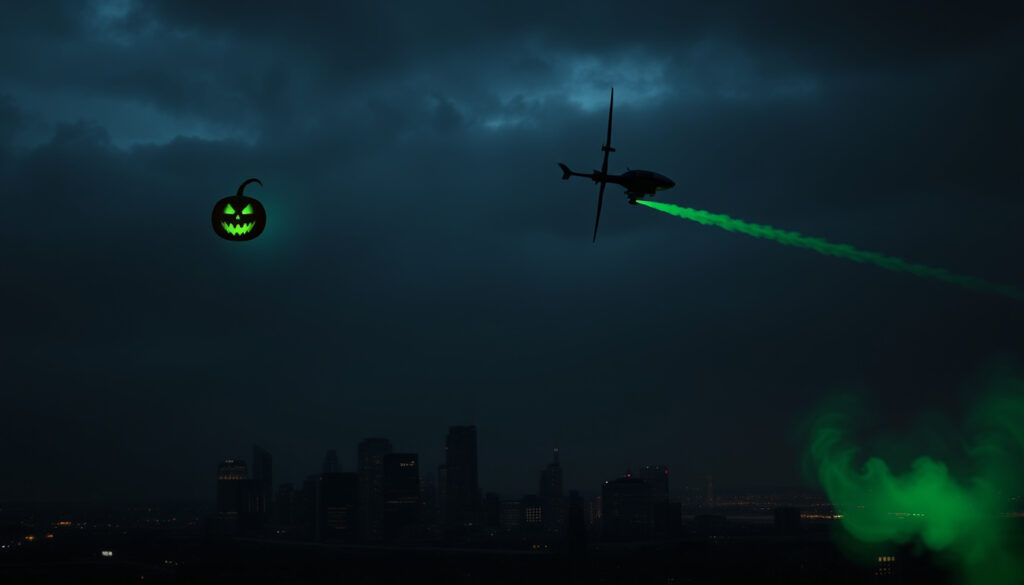
Green Goblin – Complete Guide to Origin, Powers and Movie Appearances
The Green Goblin is widely considered Spider-Man’s greatest enemy, a terrifying figure whose impact on the Marvel Universe extends far beyond simple villainy. For decades, this green-clad menace has represented the darkest possible outcome for a brilliant mind corrupted by power and madness. Understanding the Green Goblin means understanding the heart of the Spider-Man mythos itself.
At its core, the Green Goblin is a story about identity. The figure is not a single person but a mantle, most famously worn by industrialist Norman Osborn. His transformation from a corporate magnate to a cackling, pumpkin-bomb-throwing supervillain is one of comics’ most tragic and influential origin tales. The character’s blend of high-tech weaponry, superhuman strength, and a deeply fractured psyche makes him a uniquely dangerous and compelling antagonist.
Who Is the Green Goblin? Identity and Real Name
Norman Osborn (primary)
The Amazing Spider-Man #14 (1964)
Oscorp, Sinister Six, Dark Avengers
Willem Dafoe (Spider-Man trilogy, No Way Home)
The real name behind the Green Goblin is Norman Osborn, the brilliant and ruthless head of Oscorp. He is the original and most iconic bearer of the mantle, created by Stan Lee and Steve Ditko. His first appearance in The Amazing Spider-Man #14 in 1964 introduced a villain who would become Spider-Man’s defining adversary.
Key Insights
- The Green Goblin is Spider-Man’s archenemy, responsible for key plot points like Gwen Stacy’s death.
- Norman Osborn’s multiple personality disorder (or goblin persona) is a central character trait, portrayed differently in comics and movies.
- The character has been reinvented several times: original Norman, Harry Osborn, and even other characters taking the mantle.
- Willem Dafoe’s portrayal in the Raimi films and No Way Home is widely considered definitive.
Key Facts at a Glance
| Attribute | Detail |
|---|---|
| Alter ego(s) | Norman Osborn, Harry Osborn, others |
| Creators | Stan Lee, Steve Ditko |
| Powers | Super strength, intelligence, goblin formula enhancements |
| Weapons | Pumpkin bombs, razor bats, glider, goblin serum |
| Family | Harry Osborn (son), Gwen Stacy (killed by Goblin) |
| Movie actors | Willem Dafoe, Chris Cooper (The Amazing Spider-Man 2) |
How Did Norman Osborn Become the Green Goblin? Origin Story
Norman Osborn’s best-known comic origin is that he became the Green Goblin after testing an unstable enhancement serum on himself. The chemical explosion left him hospitalized, but he later emerged with increased strength and intelligence, along with worsening sanity and reduced moral restraint. Marvel’s official profile describes him as an abusive-father-turned-corporate villain who created the Goblin persona after that lab accident.
The Goblin Formula
The serum at the heart of his transformation is known as the Goblin Formula. It is an unstable concoction designed to enhance human physical and mental capabilities. The side effects, however, are catastrophic. The formula fundamentally destabilizes Norman’s mind, unlocking a separate, chaotic, and sadistic alter ego. In many tellings, the Goblin persona is portrayed not as Norman simply “becoming evil,” but as a chemically induced psychosis layered onto his own ambition.
While the lab accident is the most famous origin, later stories have retconned details. Some versions suggest Norman knew exactly what he was doing, while others present the transformation as a complete accident. The uncertainty is part of the character’s lore.
Harry Osborn: The Second Green Goblin
The Goblin identity has also been used by Harry Osborn, Norman’s son and Peter Parker’s former friend. Harry’s involvement is important because Norman’s legacy, family conflict, and the Goblin persona are deeply tied together across Spider-Man history. In comics and the Spider-Man 3 film (2007), Harry takes up the mantle after Norman’s death, seeking revenge against Spider-Man.
What Powers and Abilities Does the Green Goblin Have?
The Green Goblin is not a supernatural entity. His power set is a combination of chemically enhanced physiology and advanced technology. This makes him a formidable physical threat with the resources of a major corporation at his back.
Superhuman Strength and Enhanced Intelligence
Superhuman strength and enhanced intelligence are the signature results of Norman’s exposure to the Goblin Formula. He can go toe-to-toe with Spider-Man, trading blows with the hero with ease. The formula also grants regenerative abilities in some versions, allowing survival of injuries that would otherwise be fatal.
Signature Weapons and Gadgets
- Pumpkin Bombs: Grenade-like explosives associated with Halloween styling. They are the Goblin’s most iconic weapon.
- Goblin Glider: A flying board used for mobility and attacks. It is a silent, highly maneuverable piece of tech that allows him to strike from the air.
- Razor-Sharp Bat-Shaped Blades: Themed throwing weapons used in combat.
The exact balance of powers shifts between stories. In the comics, his intelligence is often highlighted as a key trait, allowing him to build complex schemes. In the Raimi films, the focus is more on his raw physicality and the instability of his mind.
Who Played the Green Goblin in Movies? Film Appearances
Willem Dafoe is the most famous live-action Norman Osborn / Green Goblin actor, portraying the character in Sam Raimi’s Spider-Man films (2002 and 2007) and later returning in Spider-Man: No Way Home (2021).
In the Raimi trilogy, Norman is an Oscorp scientist who tests a performance-enhancing serum on himself, becomes the Green Goblin, and dies after being impaled by his own glider. This version remains one of the most iconic villain portrayals in superhero cinema history.
In Spider-Man: No Way Home, the character was resurrected and brought through the multiverse after Doctor Strange’s spell malfunctioned. This film explores the duality of Norman’s personality more deeply, showing his struggle against the Goblin identity within his own mind.
Chris Cooper also played a version of Norman Osborn / Green Goblin in The Amazing Spider-Man 2 (2014), though this portrayal was brief compared to Dafoe’s.
Why Does the Green Goblin Have Multiple Personalities?
In many tellings, Norman does not merely “become evil”; the Goblin persona is portrayed as a separate, chaotic, sadistic alter or as chemically induced psychosis layered onto his own ambition. The MCU-oriented summary describes Osborn as developing an alter known as Green Goblin after using an incomplete enhancement serum.
Comic summaries emphasize that the Goblin Formula destabilizes Norman’s mind, and some storylines treat the Goblin as more overtly separate from Norman’s ordinary personality than others. In some versions, Norman forgets he is the Goblin altogether, leading to long periods where the two identities struggle for control. This psychological complexity adds depth beyond typical supervillains, making him a favorite for analysis.
What Is the Green Goblin’s Relationship with Spider-Man?
Norman Osborn is not just a villain with gadgets; he is one of Spider-Man’s most important long-term enemies because his conflict combines science, wealth, family trauma, mental instability, and personal betrayal. The Green Goblin serves as a dark mirror to Spider-Man, representing the corruption of power and the consequences of scientific hubris. His periodic returns and role in major storylines, such as The Clone Saga and Dark Reign, cement him as a top-tier Marvel villain.
The most famous moment in their rivalry is “The Night Gwen Stacy Died” in The Amazing Spider-Man #121–122, where the Green Goblin kills Gwen Stacy. This event defined Spider-Man’s sorrow and solidified the Goblin as his greatest threat. You can read more about the broader world of hero-villain dynamics in our Sonic X Shadow Generations Guide.
Green Goblin: A Timeline of Key Appearances
- : First appearance in The Amazing Spider-Man #14.
- : Kills Gwen Stacy in “The Night Gwen Stacy Died.”
- : Harry Osborn becomes the second Green Goblin in the comics.
- : Willem Dafoe portrays Norman in Sam Raimi’s Spider-Man film.
- : Chris Cooper plays Green Goblin in The Amazing Spider-Man 2.
- : Willem Dafoe returns in Spider-Man: No Way Home.
What Is Certain and Uncertain About the Green Goblin’s Mental State?
| Established Information | Information That Remains Unclear |
|---|---|
| In the comics, the Green Goblin personality is a result of a chemical formula. | It’s ambiguous whether it’s a separate persona or Norman’s true self. |
| In the 2002 film, the goblin persona is depicted as dissociative identity disorder triggered by the serum. | In No Way Home, the exact nature is left somewhat open to interpretation. |
| The goblin formula causes a fractured personality and moral disinhibition. | The balance between organic psychosis and induced mania varies by story. |
Why Is the Green Goblin So Important to the Marvel Universe?
The Green Goblin image has become so iconic that later adaptations often use it as the template for the entire “Spider-Man’s greatest enemy” idea. The character’s psychological complexity adds depth beyond typical supervillains, making him a favorite for analysis. He is a personification of everything Peter Parker fears: the corruption of good intentions, the failure of science, and the destruction of personal relationships. Looking at other franchise adaptations, such as the upcoming Minecraft Movie Release Date 2025, the challenge of bringing a beloved villain to the screen remains a key topic for discussion.
Sources and Quotes on the Green Goblin
“The Green Goblin is a classic example of a villain who is a dark mirror of the hero. He has all the power and intellect of Spider-Man, but none of the responsibility.”
— Stan Lee (paraphrased from multiple interviews)
“The Goblin Formula destabilizes Norman’s mind, and some storylines treat the Goblin as more overtly separate from Norman’s ordinary personality than others.”
— Marvel Fandom Wiki
Summary: Everything You Need to Know
The Green Goblin is Marvel’s definitive Spider-Man supervillain. He is a brilliant corporate leader who, through a flawed super-soldier serum, gains incredible power and a fractured, murderous personality. His legacy includes the death of Gwen Stacy and a long, personal war with Spider-Man. Portrayed most famously by Willem Dafoe, the character’s mix of high-tech terror and deep psychological drama ensures his place as one of the greatest comic book villains of all time.
Frequently Asked Questions
Is the Green Goblin in Spider-Man: Homecoming?
No, the Green Goblin does not appear in Spider-Man: Homecoming. He returns in No Way Home.
What is the Green Goblin’s weakness?
The goblin formula causes mental instability, and his glider and weapons have been used against him. Spider-Man often exploits his arrogance.
Did Harry Osborn become the Green Goblin?
Yes, in the comics and the Spider-Man 3 film (2007), Harry Osborn takes up the mantle after Norman’s death.
What are the Green Goblin’s pumpkin bombs made of?
The bombs are fictional concussion/chemical weapons; the composition varies across iterations.
Can the Green Goblin fly?
He uses a hover glider; he cannot fly independently.
Is the Green Goblin stronger than Spider-Man?
In most versions, the Green Goblin possesses superhuman strength comparable to Spider-Man, making their physical fights very even.
Who is the Green Goblin’s son?
Harry Osborn is Norman Osborn’s son and a close friend of Peter Parker, who also becomes a Green Goblin.
Did Andrew Garfield play the Green Goblin?
No, Andrew Garfield played Spider-Man. Chris Cooper played Norman Osborn in the Andrew Garfield films.
More related posts
 Road Tax Price Check – UK 2025 Rates and Free Calculator
 John Lydon – Biography, Career, and Personal Life
 Net Salary Calculator UK – Free Take-Home Pay Estimator 2025/26
 Festival of Speed 2025 – Schedule, Drivers and Highlights
 Wrap of the Day McDonald’s – UK Schedule Prices Guide
 Fergus Club Mallorca Waterpark – Honest Family Review 2025
 Greater Anglia Delay Repay – Complete Guide to Claiming Compensation
