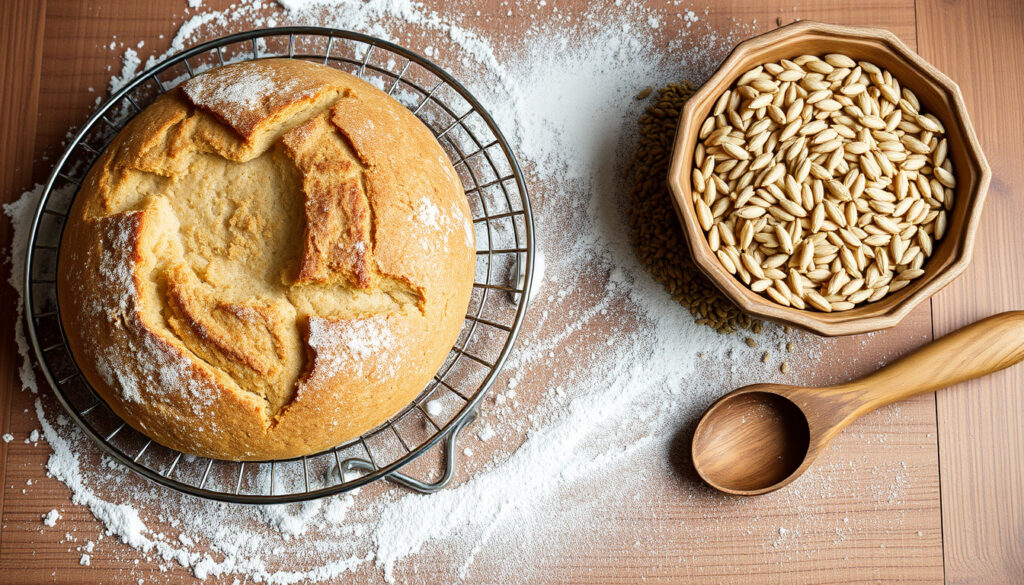
How to Make Bread – Complete Beginner’s Guide to Baking at Home
Bread making is a skill that has sustained households for centuries, yet many home cooks consider it beyond their reach. The truth is that a simple, satisfying loaf can be made with as few as four ingredients and no professional equipment. This guide walks through the essential steps, ingredient choices, and equipment options for anyone ready to bake at home.
Whether the goal is a classic sandwich loaf, a crusty artisan boule, or a quick stovetop bread, understanding a few core principles makes the process predictable and rewarding. The information presented here draws on tested recipes, food science resources, and expert guidance to offer a clear starting point.
The content below is organised around the most common questions beginners ask, from basic techniques to alternative methods such as no-yeast and stovetop approaches. Each section provides actionable detail without assuming prior experience.
How to Make Bread Step by Step for Beginners
2-3 hours (active: 15-20 minutes)
Flour, water, salt, yeast (or no-yeast alternatives)
Beginner-friendly (no special skills required)
Oven, stovetop pan, or bread machine
Several key findings emerge from current recipes and food science research. These insights help set realistic expectations and avoid common pitfalls.
- The simplest path to homemade bread uses just four ingredients (flour, water, salt, yeast) with no kneading required, as demonstrated by Sally’s Baking Addiction Artisan Bread recipe.
- Strong white or bread flour is preferred for traditional loaves due to higher protein (gluten) content, but plain flour can work in a pinch, a point confirmed by BBC Good Food and Bake with Jack.
- Bread making without yeast relies on chemical leaveners (baking powder, baking soda) or naturally occurring fermentation via a sourdough starter.
- Stovetop baking is a viable alternative when an oven is unavailable; a lidded cast-iron skillet or Dutch oven creates the necessary steam environment.
- No single guide currently covers all variant intents (basic, no-yeast, stovetop, sourdough) in one coherent structure, leaving a gap for comprehensive decision-support content.
- Active preparation time is typically under 30 minutes even for recipes that require hours of resting or fermentation.
- Measuring ingredients by weight rather than volume improves consistency and success rates for beginners.
| Bread Type | Key Ingredient | Kneading Required | Total Time | Best For |
|---|---|---|---|---|
| Basic White Loaf | Strong white flour + yeast | Yes | 2-3 hours | Sandwiches, toast |
| No-Knead Artisan | Bread flour + yeast | No | 5+ hours (mostly resting) | Crusty artisan loaves |
| Soda Bread (No Yeast) | Plain flour + baking soda | Minimal | 30-45 minutes | Quick bread, scones |
| Sourdough | Bread flour + sourdough starter | Yes | 12-48 hours | Tangy flavor, crusty bread |
| Stovetop Pan Bread | Plain flour + yeast or baking powder | Minimal | 45 minutes | No oven needed |
| Wholemeal / Brown Bread | Whole wheat flour + yeast | Yes | 2-3 hours | Healthier option |
Essential Ingredients for Basic Homemade Bread
A standard loaf requires flour, water, salt, and a leavening agent. BBC Good Food specifies 500g strong white flour, 2 tsp salt, and a 7g sachet of fast-action yeast as the foundation for an easy white bread. Water hydrates the flour and activates the yeast; the ratio typically ranges between 60% and 75% hydration depending on the flour type.
Step-by-Step Mixing and Kneading Process
Combine dry ingredients first, then add lukewarm water. Mix until a shaggy dough forms. For traditional loaves, knead on a lightly floured surface for 8-10 minutes until the dough becomes smooth and elastic. Bake with Jack emphasises that proper kneading develops gluten, which gives bread its structure. No-knead methods skip this step entirely, relying on a long rest period to allow gluten to form naturally.
Proofing and Baking Times Explained for Beginners
First proofing typically takes 1-2 hours at room temperature, until the dough has doubled in size. After shaping, a second proof of 30-60 minutes is common for traditional recipes. Baking at 200-220°C (400-425°F) for 30-40 minutes produces a golden crust. Internal temperature should reach 90-95°C (195-205°F) for fully baked bread.
Gently press a finger into the dough. If the indentation remains and does not spring back, the dough is ready. If it springs back quickly, allow more time. This test works for both first and second rises.
Can You Make Bread Without Yeast or With Plain Flour?
Two of the most frequent questions from beginners involve yeast availability and flour type. Both have straightforward answers that expand the range of possible recipes.
How to Make Bread Without Yeast: Simple Alternatives
When yeast is not available, baking soda or baking powder can serve as chemical leaveners. Soda bread, a classic Irish recipe, uses baking soda activated by buttermilk or an acid such as lemon juice. It requires minimal kneading and bakes in under an hour. Sourdough is another no-yeast method that relies on a fermented starter of flour and water to cultivate wild yeasts and bacteria. King Arthur Baking offers a no-knead sourdough recipe that uses a ripe starter and produces a tangy, chewy loaf with a total time of 12-48 hours including cold fermentation.
Making Bread with Plain Flour vs. Bread Flour
Plain flour contains less protein than bread flour, which means less gluten development and a softer, less chewy texture. Bread made with plain flour will still rise and taste good, especially in recipes such as soda bread or flatbreads where a tender crumb is desirable. For yeasted loaves, bread flour provides more structure and a higher rise. The Cornell University food science department notes that protein content directly influences gluten formation, making flour choice a key variable in bread texture.
No-Yeast Bread Recipes for Quick Results
Recipes without yeast are among the fastest breads to prepare. A simple soda bread can be mixed and baked in 30-45 minutes. Ingredients typically include plain flour, salt, baking soda, and buttermilk or yogurt. Some variations add oats, seeds, or dried fruit for flavour. These breads are best consumed the same day, as they stale faster than yeasted loaves.
How to Make Bread in a Pan (Without an Oven)
Stovetop bread baking is a practical solution for those without oven access. It requires a heavy, lidded pan such as a cast-iron skillet or Dutch oven to trap steam and create a crust.
Stovetop Bread Baking: Tips for Using a Pan
Preheat the pan on medium-high for 10 minutes before adding the dough. Place the dough on parchment paper, lower it into the pan, cover, and reduce the heat to low. Bake covered for 40-50 minutes, then uncover for the final 10 minutes to crisp the crust. Homestead and Chill provides a step-by-step sourdough adaptation for stovetop that uses this method and recommends rotating the loaf halfway through for even browning. Internal temperature should reach about 95°C (205°F).
Bread Maker Recipes: Using a Bread Machine
A bread machine automates mixing, kneading, proofing, and baking. Most machines come with a basic white bread recipe that calls for water, flour, salt, sugar, butter or oil, and yeast. Ingredients are added in a specific order (liquids first, then dry ingredients, yeast last) to ensure proper activation. While machines simplify the process, the quality of the bread depends on ingredient freshness and accurate measurement. USDA guidelines stress that flour is a raw agricultural product and should not be consumed raw; baking or cooking at appropriate temperatures eliminates potential pathogens.
The lid must fit tightly to trap steam during stovetop baking. If the lid is loose, wrap the pan’s rim with foil before covering. This step mimics the steam environment of a professional oven and is essential for crust development.
How to Make Sourdough Bread and Other Varieties
Once basic bread making feels comfortable, many home cooks explore sourdough, wholemeal loaves, and bread rolls. These variations introduce new ingredients and techniques while building on core skills.
How to Make Sourdough Bread from Starter
Sourdough relies on a fermented starter rather than commercial yeast. The starter must be fed 4-12 hours before use and should be bubbly and doubled in volume. Mommy Gearest provides a timed schedule that fits around a workday: feed the starter at 5 PM, mix the dough at 8:15 PM, perform stretch-and-folds until 10:30 PM, shape, and refrigerate overnight. The next morning, the dough is ready for stovetop baking. Nutmeg Nanny offers a 5-ingredient version that yields two loaves with a tangy flavour profile.
Brown and Wholemeal Bread: Substituting Flours
Wholemeal or whole wheat flour contains the entire grain kernel, which adds fibre, nutrients, and a denser texture. When substituting wholemeal for white flour, increase the water slightly because wholemeal absorbs more moisture. A common approach is to start with a 50/50 blend of wholemeal and bread flour to maintain a lighter crumb while adding nutty flavour. Baking times remain similar to white bread, though the crust may darken faster.
Homemade Bread Rolls: A Simple Recipe
Bread rolls follow the same process as a standard loaf but are shaped into smaller portions. Divide the dough into 8-12 equal pieces, shape each into a smooth ball, and proof for 30-45 minutes before baking. Rolls bake faster than a full loaf, typically 15-20 minutes at 200°C (400°F). They freeze well and can be reheated directly from frozen.
Sourdough and no-knead recipes often use high hydration (70% or more water relative to flour), producing a sticky dough that is difficult to handle. Wet your hands and scraper before touching the dough, and resist the urge to add excess flour, which can make the final loaf dry and dense.
Evolution of Homemade Bread Making
Understanding how home bread making has changed over the decades helps explain why certain methods are popular today and why so many options exist for beginners.
- Pre-1970s – Bread making was a household staple; flour and yeast were pantry basics. Most families baked their own bread regularly.
- 1970s-1990s – Commercial bread production expanded at industrial scale, and home baking declined significantly as store-bought loaves became cheap and convenient.
- 2000-2010 – The no-knead method popularised by Jim Lahey revolutionised home baking by eliminating the most intimidating step. A single long rise replaced active kneading.
- 2010-2020 – Sourdough experienced a massive surge during the COVID-19 pandemic, with millions of people worldwide starting their first starters and sharing results online.
- 2024-present – Algorithm-driven recipes now prioritise simplicity, few ingredients, and alternative methods such as no-yeast, pan bread, and bread machines to cater to diverse skill levels and equipment access.
Common Bread Making Myths and Facts
Several widely repeated claims about bread making can mislead beginners. The table below separates established information from areas that depend on recipe or method.
| Claim | Status | Explanation |
|---|---|---|
| Salt kills yeast instantly | Fact if misapplied | Salt can inhibit yeast if mixed directly together, but when dissolved in flour or water first, it controls yeast activity and strengthens gluten. Yeast is not killed instantly. |
| You must knead bread for 10+ minutes | Depends on method | Traditional yeasted loaves require kneading to develop gluten, but no-knead methods rely on time and high hydration instead. Both yield good results. |
| Plain flour cannot make good bread | False | Plain flour (lower protein) can make bread, especially soda bread, flatbreads, and even some yeasted loaves, though the texture will be softer and less chewy than bread flour loaves. |
| Bread must rise twice | Depends on recipe | Many traditional recipes call for two rises, but many modern recipes (especially no-knead) use a single long rise. The double rise is not universally required. |
Why Bread Making Understanding Matters for Home Cooks
Bread making consistently ranks among the most searched cooking skills globally, reflecting both a foundational knowledge gap and growing interest in self-sufficiency, health-conscious eating, and cost savings. The search data shows a strong divide between beginners seeking simplicity (no yeast, few ingredients, stovetop) and enthusiasts exploring sourdough and wholemeal varieties. A single guide that addresses both entry-level confidence and curiosity-driven depth serves the widest audience.
The competitive search landscape is dominated by recipe-focused content. A gap exists in comparative, decision-support material that helps users choose a method based on available equipment, dietary needs, and time constraints, rather than presenting only one recipe. This article aims to fill that gap by offering structured comparisons and transparent explanations throughout.
Sources and Expert Voices
The following quotes from trusted sources reinforce the core principles covered in this guide.
“Stick to the basics – you can make simple bread with good-quality ingredients and a straightforward recipe. Water, yeast, salt and enough flour to make it all.”
— Ahyggehomestead.com, The Beginner’s Guide to Making Bread
“This homemade artisan bread recipe is great for beginners because it only requires 4 ingredients without any special pans or kneading.”
— Sallysbakingaddiction.com, Artisan Bread Recipe
“Mix 500g strong white flour, 2 tsp salt and a 7g sachet of fast-action yeast in a large bowl.”
— BBC Good Food, Easy White Bread Recipe
“The BEST and simplest homemade Bread recipe made with just six simple pantry ingredients!”
— Tastesbetterfromscratch.com, Homemade Bread Recipe
What Is the Best Way to Start Making Bread at Home?
For a complete beginner, the most effective starting point is a no-knead artisan bread made with bread flour, water, salt, and yeast. This method eliminates the most intimidating step (kneading) while producing a loaf that looks and tastes professional. From there, experimenting with wholemeal flour, stovetop baking, or sourdough starter builds skills progressively. All Bread Recipes Collection provides additional variations for those ready to explore further.
Frequently Asked Questions
How do I know when my bread dough has risen enough?
The dough should have doubled in size. To test, gently poke it with your finger: if the indentation remains and does not spring back quickly, it is ready. If it springs back, it needs more time.
Can I use all-purpose flour instead of bread flour?
Yes. The bread may be slightly less chewy and rise a bit less, but it will still work. Increase the water slightly as all-purpose absorbs less moisture than bread flour.
Why did my bread turn out dense and heavy?
Possible reasons include old yeast, insufficient kneading (for traditional recipes), too much flour added, or under-proofing. Ensure your yeast is active and measure ingredients by weight for best results.
How should I store homemade bread?
Store in a paper bag at room temperature for 2-3 days. For longer storage, wrap tightly in plastic wrap and freeze for up to 3 months. Refrigeration dries out bread faster and is not recommended.
Do I need a bread machine to make bread at home?
No. A bread machine automates mixing, kneading, and baking, but you can achieve excellent results with a mixing bowl, your hands (or a stand mixer), and an oven or stovetop pan.
What is the difference between active dry yeast and instant yeast?
Active dry yeast must be dissolved in warm water before use, while instant yeast can be mixed directly with dry ingredients. Instant yeast has smaller granules and works faster, but both produce similar results.
Can I add seeds or nuts to my bread dough?
Yes. Add up to 100g of seeds, nuts, or dried fruit per 500g of flour. Fold them in gently after the first rise to avoid disrupting the gluten structure.
How do I create steam in a regular oven for a crispy crust?
Place a shallow metal pan on the bottom rack while preheating. After putting the dough in the oven, pour a cup of hot water into the pan and quickly close the door. The steam helps develop a thin, crisp crust.
What does “hydration” mean in bread recipes?
Hydration is the ratio of water to flour by weight. A 70% hydration dough uses 70g of water for every 100g of flour. Higher hydration produces an open, airy crumb but makes the dough stickier and harder to handle.
Is sourdough healthier than regular bread?
Sourdough fermentation breaks down some gluten and phytic acid, which may improve digestibility and mineral absorption for some people. However, nutritional differences between sourdough and standard yeasted bread are modest and depend on the flour used.
More related posts
 Shola Mos-Shogbamimu – Biography Career and Personal Life
 Business Coach Small Business – UK Guide and Top Picks
 Chicken Thigh Tray Bake – Easy One-Tray Dinner with Crispy Skin
 Wrap of the Day McDonald’s – UK Schedule Prices Guide
 Man Utd vs Tottenham – Head-to-Head Record and Stats
 Premier League Dart Ticket – 2026 Price , Date & Official Guide
 When Did Elvis Presley Die – Age, Cause and Myths Explained
